
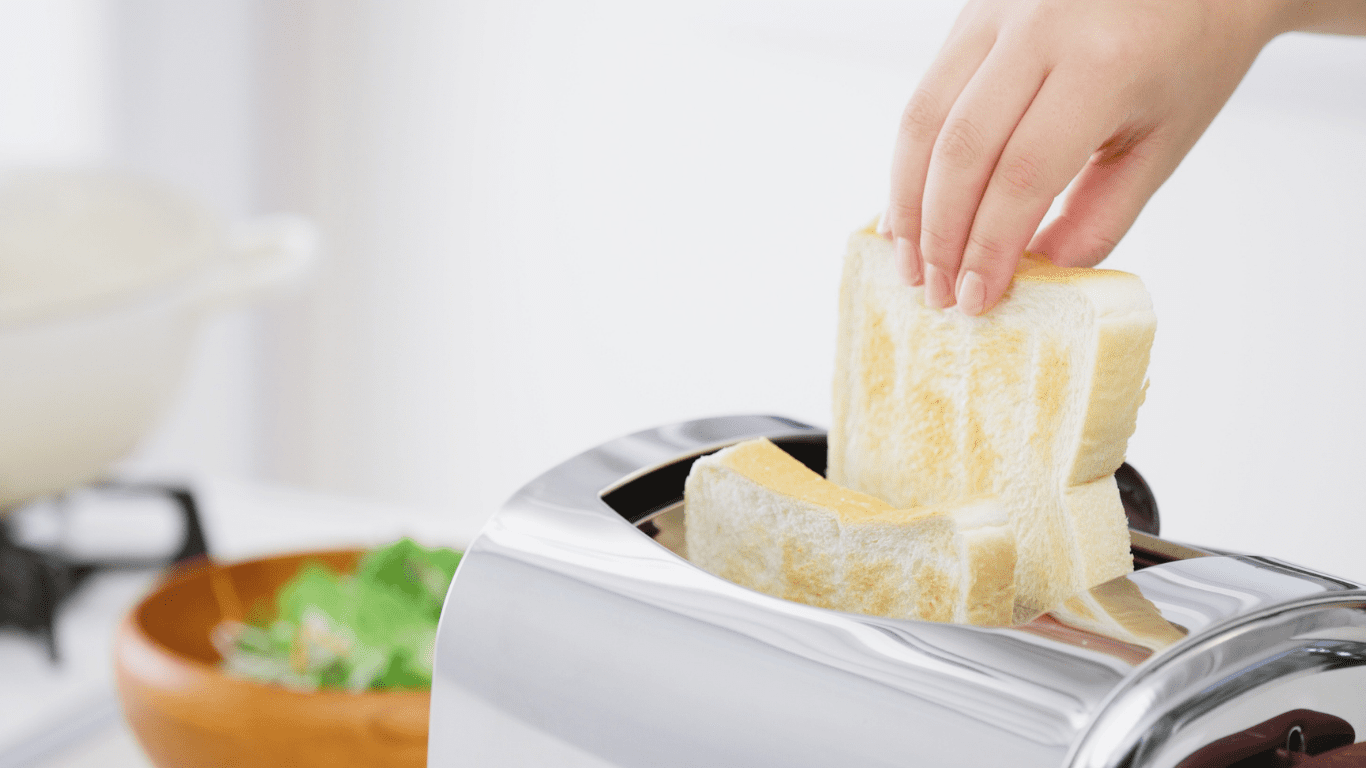
Why You’re Still Getting “Glutened” in a “Safe” Kitchen
You’ve spent a fortune on gluten-free bread. You’ve spent hours in the grocery store aisles squinting at labels. You’ve cleared out the pantry. Yet, here you are—bloated, fatigued, and wondering why your Celiac symptoms won’t go away.
If you’re doing “everything right” and still getting sick, the problem usually isn’t what you are eating. It’s where your food is being prepared.
In the Celiac community, we call this the “Invisible Enemy.” Celiac cross contamination in a shared kitchen is the #1 reason for ongoing symptoms in newly diagnosed households. If you live with people who still eat “regular” bread, your kitchen is a potential minefield.
The Science of a Single Crumb
For someone with Celiac Disease, the threshold for a reaction is incredibly low—just 20 parts per million. To visualize that: if you took a slice of regular wheat bread and cut it into 160,000 tiny pieces, just one of those pieces is enough to trigger an autoimmune response and damage your small intestine.
In a shared kitchen, those “crumbs” aren’t just on the counter; they are microscopic, they fly through the air, and they hide in your tools.
The 3 “Silent Killers” in Your Kitchen
You might think your dishwasher is a magic reset button, but for some kitchen tools, “clean” isn’t good enough.
1. The Porous Tool Trap (Wooden Spoons & Boards)
Wood is a beautiful, natural material—and it’s a Celiac’s worst nightmare. Because wood is porous, it has microscopic “pores” that soak up whatever it touches. If you have a wooden spoon you’ve used to stir wheat pasta for the last five years, that spoon has gluten proteins living deep inside the wood grain. No amount of scrubbing or high-heat dishwashing will ever get it 100% safe.
- The Fix: Switch to stainless steel, silicone, or marble.
2. The Colander Problem
Think about your plastic or metal colander. It has hundreds of tiny, jagged holes designed to catch pasta. When you drain wheat noodles, gluten “paste” gets stuck in the crevices of those holes. Because the holes are so small, sponges and dishwashers often miss the microscopic residue. When you later use that same colander to drain your gluten-free pasta, you are essentially “rinsing” your safe food in gluten leftovers.
- The Fix: Buy a dedicated “GF Only” colander in a different color so it never gets mixed up.
3. The “Double Dip” Disaster
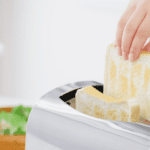
This is the most common way families accidentally poison each other. Imagine this: a family member takes a clean knife, swipes it into the butter jar, spreads it on wheat toast, and then—out of habit—swipes that same knife back into the jar for a second helping.
That jar of butter, peanut butter, or mayonnaise is now a “Gluten Trap.” The crumbs from the toast are now living in the jar, waiting to land on your gluten-free meal.
- The Fix: Use squeeze bottles for condiments or buy two separate jars and label yours with a giant “GF” in permanent marker.
How to Stop the Anxiety
Living in a shared kitchen shouldn’t feel like walking through a laboratory. You don’t need to be a scientist; you just need a repeatable system that the whole family can follow.
You don’t have to renovate your kitchen to be safe, but you do need to reset it.
Secure Your Sanctuary
Setting up a safe kitchen is the foundation of your healing. If you’re tired of the guesswork and the “accidental” exposures, I’ve built a blueprint for you.
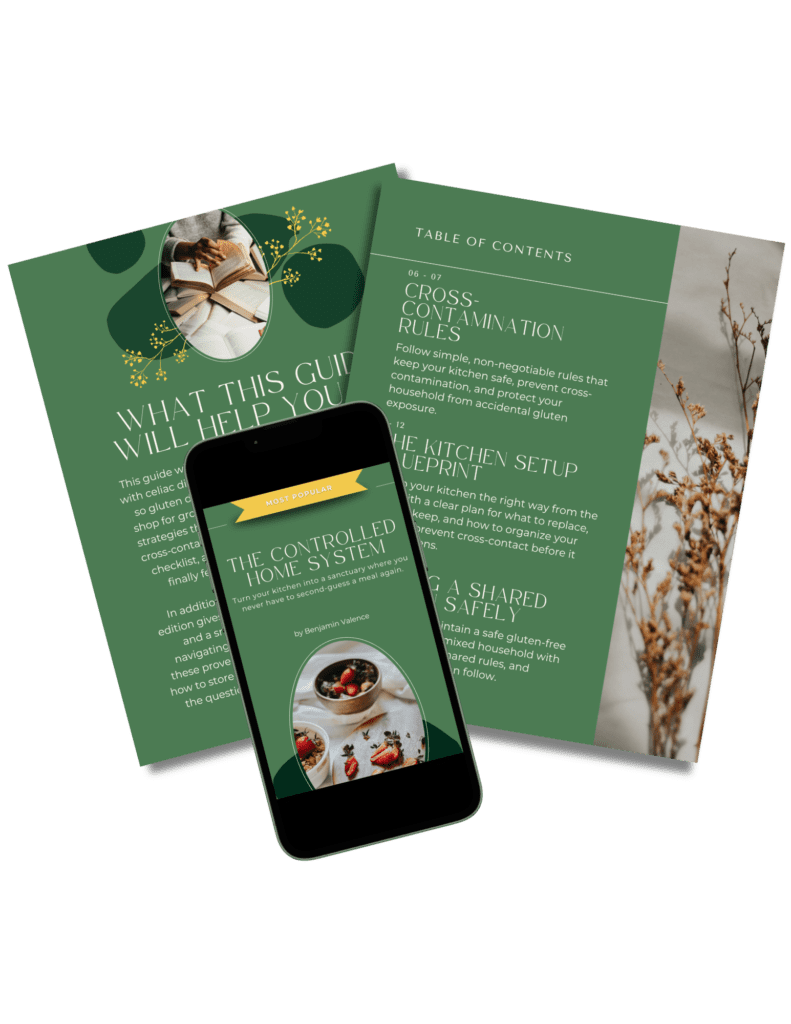
In Tier 2: The Controlled Home System, I walk you through the non-negotiable rules for shared households. You’ll get the Kitchen Setup Blueprint that shows you exactly what to replace, what to keep, and how to organize your counters to prevent cross-contact before it ever happens.
Stop getting sick in your own home. Let’s make your kitchen a safe zone.

Leave a Reply